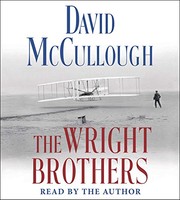
The Wright Brothers
, Biography, 2015
A concise account of the Wright brothers for anyone attempting something hard.
About the book
The brothers had no college education, little money, no outside funding, and few useful connections. They financed their work through the bicycle business, kept meticulous records, tested assumptions themselves, and advanced through disciplined iteration.
Why it matters in Founders
The Wright brothers were underfunded and won anyway, and their working method is a repeatable blueprint: test, iterate, work hard, ignore critics. Their low-cost solution shows relentless resourcefulness, and their success is proof that better-funded competitors don't settle the outcome.
The story also treats disagreement and independence as part of the work: their arguments are framed as productive internal conflict rather than dysfunction, and a growing obsession with the problem is treated as a sign of being on the right path. That's useful for readers weighing how a small, disagreement-tolerant team keeps learning without deferring to critics or better-funded rivals.
What you’ll learn
Knowledge over power
The brothers' maxim puts the best return on effort in gaining knowledge rather than power. The practical question is whether your effort is going into understanding the problem or into gaining influence.
Make disagreement useful
The brothers argued, and those arguments worked as productive internal conflict. The example is a case of disagreement that advanced shared work rather than consuming it.
Obsession as a signal
A growing obsession with a problem is a sign you're on the right path; the family maxim about thinking for yourself ties that instinct to trusting your own judgment over outside opinion.
Why it ranks here
Reading rank #15. First covered in Episode #28. 27 scored evidence components. 13 Founders episodes. Coverage Score 331. Praise on record: David strongly recommends the book, saying it belongs in every founder's library.
Explore evidence and score breakdownOpen timeline
How the Coverage Score works
Reviewed Founders evidence adds points: a dedicated episode, a qualifying reread, explicit praise, or a reference in a later episode. Repeats of the same kind in one independently recorded discussion count once, including reviewed reused passages. Genuinely new qualifying discussion adds points. The score measures coverage, not quality.
Sources: official Founders episodes — #28, #37, #38, #69, #75, #97, #98, #156, #168, #200, #239, #241, #385
The largest contribution to this Coverage Score is Dedicated episode · Primary coverage (90 points).
Original Founders sources
- The Wright Brothers — David Senra opens the episode by stating he will share ideas learned from reading The Wright Brothers by David McCullough, establishing it as the sole primary source for the episode.
- The Fish That Ate The Whale: The Life and Times of America's Banana King — David briefly recalls earlier Founders coverage of the Wright brothers. The earlier dedicated episode 28 identifies David McCullough’s biography; this passage is a contextual reference, not a book recommendation.
- The Space Barons: Elon Musk, Jeff Bezos, and the Quest to Colonize the Cosmos — David notes he previously made a Founders episode based on David McCullough's The Wright Brothers.
- Charles Goodyear: An Inventor's Obsession and the Struggle for a Rubber Monopoly — The host compares Goodyear's story to David McCullough's The Wright Brothers, referencing a prior Founders episode on that book to contrast the Wright brothers' discipline with Goodyear's recklessness.
- Henry Clay Frick: Andrew Carnegie's Partner — David calls McCullough’s Wright brothers book fantastic and says anyone trying to run a company should read it.
- Enzo Ferrari (Ferrari vs Ford) — David recalls his Founders No. 28 coverage of The Wright Brothers while explaining how public demonstrations created demand.
Explore connections
People, companies, and ideas linked to this book across Founders episodes. Choose one to see it on the map.
Numbers show how many other books share that connection.