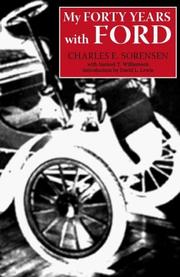
My Forty Years with Ford
, subject: Henry Ford, Edsel Ford, Charles Sorensen, and the building of Ford Motor Company, 1956
Sorensen's memoir of four decades beside Henry Ford shows a fixed aim, an affordable car, reached through experiment rather than a settled plan.
About the book
First published in 1956, the memoir follows Sorensen from patternmaker to senior production executive through the Model T, the Rouge, wartime production, and the final conflict over Ford's succession. The displayed cover is the 2006 Wayne State paperback, introduced by Ford historian David L. Lewis.
Why read it
Best if you want a close account of how Ford held to the affordable-car idea while experimenting toward mass production, and of the operator who helped his ideas take working form.
Key themes
- Keep the aim, change the route
- The operator's part in invention
- Determination can falter
Evidence and original sources
Sources: official Founders episodes — #118, #119, #125, #128, #138, #146, #190
David recommends the book directly to listeners for the fuller account of Ford, Sorensen, and the Model T era.
- Forty Years With Henry Ford — David notes this is the fourth book and fourth episode he's done on Henry Ford, situating it within a recurring study arc.
- The Dodge Brothers — David says the prior week's My Forty Years with Ford began his multipart series on Michigan automobile pioneers.
- Charles Kettering (inventor, engineer, founder) — David uses Sorensen's account of Henry Ford nearly giving up on his third automobile company to show that even formidable founders experience discouragement and can recover their determination.
- Henry Leland (Cadillac) — The host references having previously covered My 40 Years with Ford, by Charles Sorensen, as background for describing Henry Ford's behavior late in life.
- Alexander Graham Bell — David names My Forty Years with Ford and Charles Sorensen while comparing Sorensen with Thomas Watson.
- Milton Hershey (Chocolate) — David applies Sorensen's account of Ford growing into mass production through determination and experimentation to Milton Hershey's development of chocolate production.