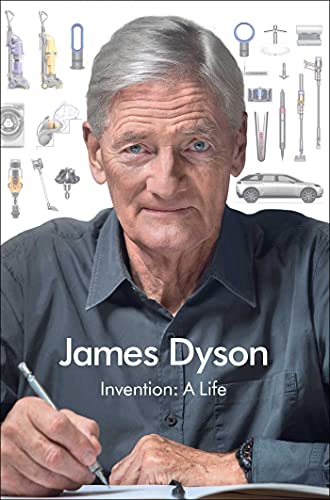
Invention: A Life
, subject: Updated autobiography of inventor and Dyson founder James Dyson, 2021
A founder account shaped by questioning assumptions, learning through failure, sustaining dissatisfaction with finished work, and tracing how his upbringing kept shaping it.
About the book
Dyson writes about a father who died when he was a teenager, his training in art and industrial design, and the thousands of failed prototypes behind the cyclonic vacuum cleaner. He also covers moving manufacturing to Asia, later products, farming and the university he established, and argues that schools do too little to foster creativity.
Why read it
Best if you are building, studying, or leading a business and want to examine how questioning assumptions, learning through failure, early family influence, and productive dissatisfaction can shape the work.
Key themes
- Question assumptions about work and life
- Treat trial and error as education
- Trace how upbringing keeps shaping the work
- Maintain productive discontent
Evidence and original sources
Sources: official Founders episodes — #205, #206, #218, #245, #280, #289, #406
This record is supported by 12 public evidence rows linked to original Founders episodes.
- James Dyson (Invention: A Life) — David identifies Invention: A Life by James Dyson as the book this episode is built around.
- Albert D. Lasker (the creation of the advertising industry) — David quotes the second James Dyson autobiography and explicitly identifies it as the book covered in Founders 205.
- Johan Cruyff (A Life of Total Football) — David uses Dyson's latest autobiography for a lesson about the enduring impact parents have on their children.
- Rick Rubin (In the Studio) — David distinguishes Dyson's second autobiography from the first and calls the later book very interesting.
- Jimi Hendrix — David attributes the idea of maintaining productive discontent with one's work to Dyson's second autobiography.
- Brunello Cucinelli — David identifies Founders episode 205 as covering James Dyson's autobiography.