Reading rank 383
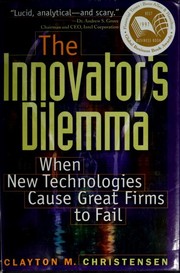
The Innovator's Dilemma
, subject: Why successful companies can fail when new technologies reshape their markets, 1997
Why do the threats that matter start at the low end, and when should a company replace its own winning product before a rival does?
24
Coverage Score
7
Scored evidence
About the book
Using successes and failures across industries, Christensen develops a framework for recognizing disruptive innovation and deciding when established business practices must change.
Why read it
Best if you lead a successful product and want to think through threats from the low end, or when to replace what is working before someone else does.
Key themes
- Threats start at the low end
- Obsoleting your own success
Evidence and original sources
Sources: official Founders episodes — #5, #60, #180, #376, #385, #403
This record is supported by 8 public evidence rows linked to original Founders episodes.
- Steve Jobs — After Jobs invokes the innovator's dilemma to explain why Apple must move beyond the computer as the digital hub, David explicitly recommends Christensen's book as a clear explanation of the theory.
- Yvon Chouinard: What We've Learned from Patagonia's First 40 Years — David names The Innovator's Dilemma while explaining Chouinard Equipment's decision to replace its best-selling pitons with less-damaging chocks, framing the move as the rare willingness to obsolete a successful product before someone else does.
- Jeff Bezos (Invention of a Global Empire) — David uses Bezos's senior-executive discussions of books including The Innovator's Dilemma to show how leaders can build a shared base of knowledge and search for unconventional approaches.
- Jensen Huang: Founder of Nvidia — David says Jensen took the lesson that competitive threats can emerge from the low end of the market.
- Michael Dell — David says he discusses the book-linked ship-the-whole-cow idea more in his Jensen Huang episode 376.
- How Jensen Works — David reports Jensen's lesson from the book that market threats often come from the low end.