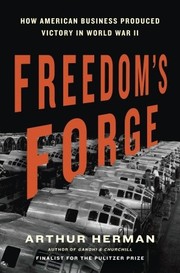
Freedom's Forge: How American Business Produced Victory in World War II
, subject: American industrial mobilization in World War II, 2012
Freedom's Forge treats American wartime industrial rearmament as a study in ingenuity and leadership, with Henry Kaiser's optimism as one concrete example.
About the book
Centered on General Motors executive William Knudsen and shipbuilder Henry Kaiser, Herman's history follows the factories, managers, and production drives behind the American arsenal of democracy.
Why read it
Best if you want to see how ingenuity and leadership shaped American wartime industrial rearmament, from Henry Kaiser's optimism to the habit of drawing information out of others.
Key themes
- Optimism as a leadership trait
- Pulling information out of others
Evidence and original sources
Sources: official Founders episodes — #169, #170, #171, #187, #196, #220, #342
This record is supported by 11 public evidence rows linked to original Founders episodes.
- David Ogilvy (The King of Madison Avenue) — David references the prior week's bonus episode covering Freedom's Forge and Henry Kaiser.
- Claude Hopkins (A Life in Advertising) — David names Freedom's Forge as a book he covered in a prior podcast and substantively applies its Henry Kaiser optimism example.
- Chuck Feeney (The Billionaire who gave all of his money away) — David cautiously attributes the suction-pump comparison to Henry Kaiser in Freedom's Forge and applies it to Chuck Feeney.
- Albert Einstein — David references his earlier bonus episode about Freedom's Forge and its subject of American wartime industrial rearmament.
- Winston Churchill (Leadership during WW2) — Points listeners to his Freedom's Forge bonus episode and notes it was recommended by Patrick Collison.
- Enzo Ferrari: The Man and the Machine — David references his bonus episode on Freedom's Forge, made between Founders No. 168 and 169.